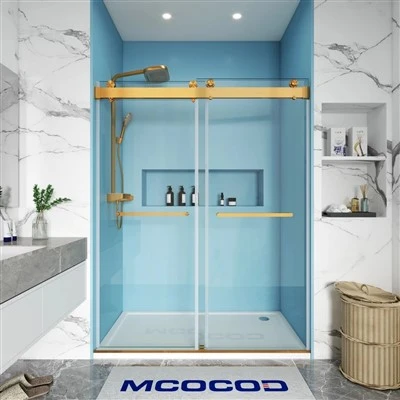
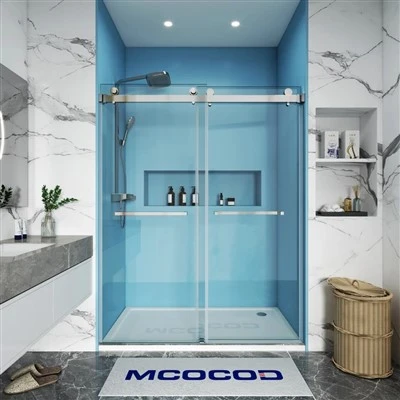
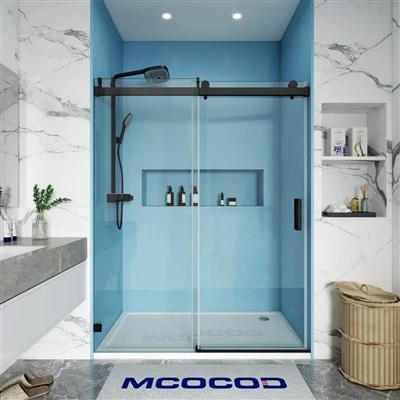
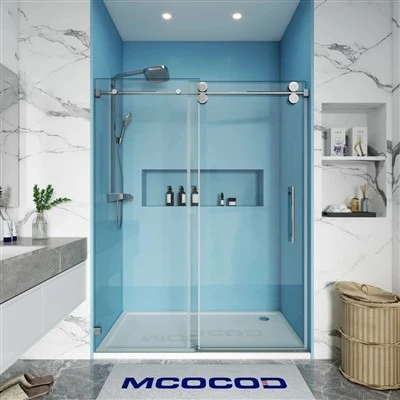
The customization of shower enclosures relies on two fundamental pillars: material selection and structural design. Taking SUS304 stainless steel as an example, its composition-featuring over 18% chromium and 8–10% nickel-allows it to form a dense oxide film in humid environments. This provides effective resistance against chloride ion corrosion, making it ideal for settings involving prolonged exposure to water.
Structurally, the enclosure utilizes a rectangular frame with a mirror-polished finish. Laser cutting and precision welding techniques ensure watertight joints, thereby eliminating the risk of leakage. The doors typically feature tempered glass-usually 6–8 mm thick-that has undergone a heat-soak process to minimize the risk of spontaneous breakage; this is paired with an anti-derailment roller system to ensure smooth operation and enhanced safety.