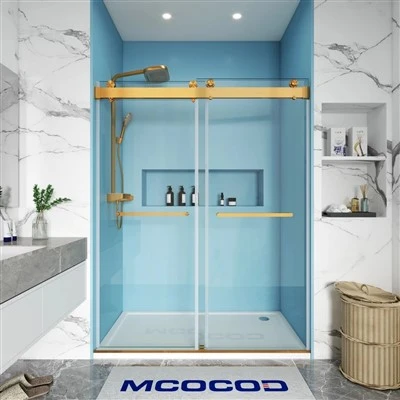
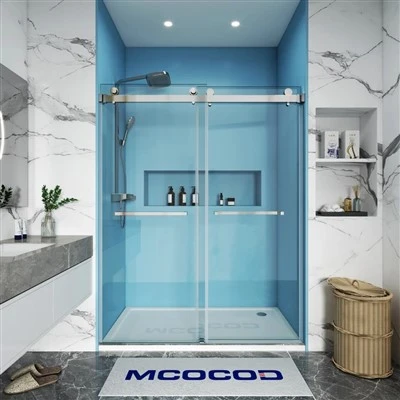
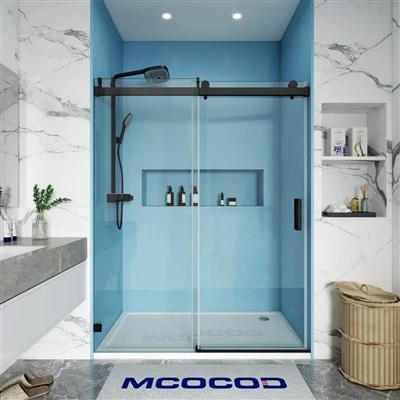
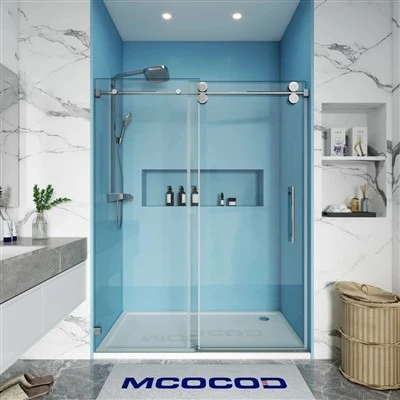
The primary function of a shower door is to separate wet and dry areas, keeping the floor dry and preventing slips. Choosing the right shower door not only affects daily convenience but also enhances the bathroom's overall aesthetic. Below are several common types of shower doors and their characteristics:
Shower Enclosure Dimensions:
The interior space of the shower enclosure should be at least 80 x 80 cm to allow the user to move comfortably. The entrance width should be at least 60 cm for easy access.
Sliding Shower Doors:
Suitable for rectangular spaces, these doors save room and come in single-panel, double-panel, and triple-panel configurations. Triple-panel doors are ideal for narrow or small bathrooms; installation is possible in openings wider than 120 cm between walls.
Hinged (Swing) Shower Doors:
These come in inward-opening and outward-opening varieties, with some modern designs featuring hinges that allow movement in both directions. Inward-opening doors save space but can become jammed, potentially hindering emergency rescue; outward-opening doors offer better safety but can cause water to drip onto the floor, making it slippery.
Framed Shower Doors:
A traditional style consisting of a metal frame (usually aluminum alloy or stainless steel) and glass panels. Advantages include stability, affordability, and durability; disadvantages include a tendency to accumulate dirt and water, making cleaning difficult.
Frameless Shower Doors:
These utilize tempered glass with minimal structural hardware and have become a popular choice in recent years. Advantages include ease of cleaning, a sleek and attractive design, and an enhanced sense of spaciousness; disadvantages include complex installation, a need for high-quality hardware to ensure stability, and a risk of glass breakage (applying shatter-resistant film is recommended).